
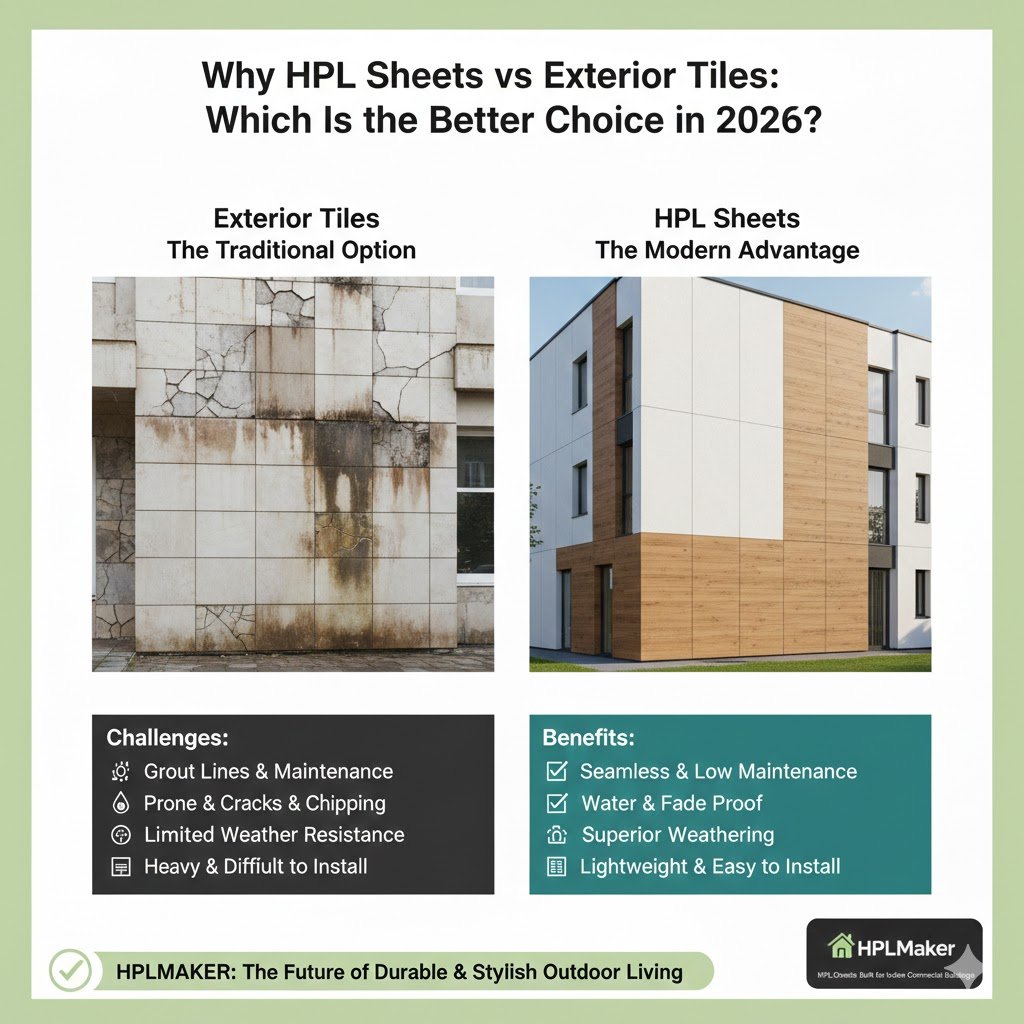
When designing modern building exteriors in 2026, homeowners and architects are increasingly comparing HPL sheets and exterior tiles. Both materials are popular, but their long-term performance and maintenance requirements differ significantly.
Let’s compare them to understand which exterior material truly delivers better value.
Understanding the Materials
What Are HPL Sheets?
HPL (High Pressure Laminate) sheets are engineered exterior panels made by compressing resin-infused kraft papers under high pressure. They are designed for durability, weather resistance, and modern aesthetics.
What Are Exterior Tiles?
Exterior tiles are ceramic or vitrified tiles used for outdoor walls. They offer a hard surface finish but depend heavily on proper installation and grouting quality.
Durability and Structural Performance
- HPL sheets are impact-resistant and handle structural movement well.
- Exterior tiles can crack or detach over time due to temperature changes and building movement.
For long-term reliability, flexibility plays a key role.
Weather Resistance and Moisture Handling
HPL sheets:
- Low water absorption
- Stable performance in rain and humidity
- No grout lines for water seepage
Exterior tiles:
- Water can seep through grout joints
- Risk of tile loosening in wet climates
This makes HPL sheets more suitable for challenging weather conditions.
Maintenance Requirements Over Time
Maintenance is a critical factor for exteriors.
HPL sheets:
- Require only basic cleaning
- Do not need repainting or regrouting
Exterior tiles:
- Require grout cleaning and repair
- May need replacement if tiles crack or fall
Lower maintenance gives HPL sheets a clear advantage.
Design Flexibility and Aesthetic Appeal
Modern exteriors demand creative freedom.
HPL sheets offer:
- Wood, stone, solid, and textured finishes
- Large, uniform panels
- Contemporary design options
Exterior tiles:
- Limited size options
- More traditional appearance
For modern architecture, HPL sheets provide greater design flexibility.
Installation Speed and Project Timelines
HPL sheet installation:
- Is faster with dry cladding systems
- Reduces on-site finishing time
Tile installation:
- Requires surface preparation, adhesive curing, and grouting
- Extends project timelines
Time efficiency favors HPL sheets.
Safety and Practical Considerations
Exterior tiles:
- Can become loose and fall if adhesive fails
HPL sheets:
- Are mechanically fixed using proper facade systems
- Provide better long-term safety when installed correctly
This is important for high-rise and public buildings.
Long-Term Cost Comparison
While exterior tiles may seem economical initially:
- Maintenance and repair costs add up over time
HPL sheets:
- Offer higher upfront value
- Deliver lower lifecycle costs
This makes HPL sheets a smarter long-term investment.
Why Modern Builders Prefer HPL Sheets
Builders and architects prefer materials that:
- Reduce post-installation issues
- Maintain appearance for years
- Support modern design trends
HPL sheets meet these expectations more consistently.
Choosing the Right Manufacturer Matters
Performance depends on material quality.
Manufacturers like HPLMaker focus on:
- Exterior-grade HPL standards
- Consistent thickness and finish
- Reliable performance over time
This ensures predictable and durable exterior results.
Final Verdict: HPL Sheets or Exterior Tiles?
In 2026:
- Exterior tiles are suitable for traditional or limited-use exteriors
- HPL sheets are ideal for modern, low-maintenance, and premium facades
For durability, aesthetics, and long-term value, HPL sheets clearly outperform exterior tiles.